When Gerald Andersen learned that his favorite stationery store, the one he used to visit every Monday with his mother after school, was closing, he was reading the January 1980 issue of the National Geographic. The dog-eared pages and the margin notes showed that issue was beloved by both mother and son, for both of them had left their fingerprints and reflections within it.
Despite how much he enjoyed going down memory lane browsing through the magazine and seeing his mother’s notes, he knew he had to go to that store one more time in her memory. Walking sideways, Gerald squeezed himself between cabinets and bookshelves, stepped over boxes of old pictures, and finally reached the shelves where the magazine now belonged. With the meticulousness of a librarian, Gerald scanned the taped notes he put on the shelves until he found the section labeled National Geographic, 1980–1996. He nudged the February issue away from the wall and squeezed the magazine he was holding next to it. Turning around, he was about to walk out the door when he saw his wife, Sandra, watching him there.
He walked over to her, gave her a quick hug, and said, “I’m going out to visit the stationery store. It’ll be shuttered after today.”
“Drive safe, Gerald, and promise me that you’ll just get one thing.”
“I’ll try my best.”
After a twenty-minute drive, Gerald reached the stationery store and saw Jackie, the current owner, waving at him. “We got some really good deals for you, Gerald,” Jackie said when Gerald walked in.
“Won’t miss them for the world,” Gerald said, smiling.
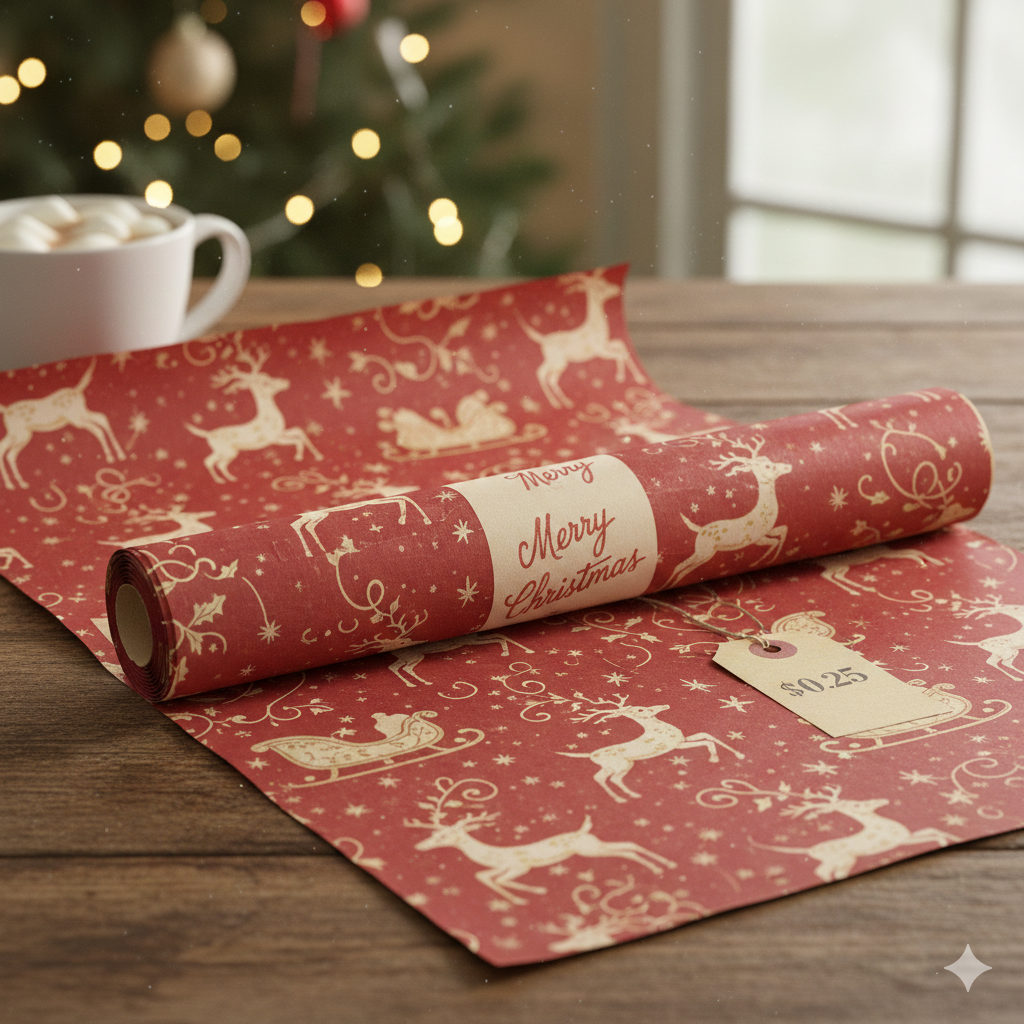
Gerald started shopping. The first thing that caught his eye was a stack of birthday cards. He remembered how he used to buy them with his mother to send to his friends, relatives, and eventually Sandra when they started dating. He decided to take the whole stack, thinking that he would eventually use them all. Gerald went to the pencils and pens section, where he bought his mother’s favorite ballpoint pens, multi-colored pens, a tin of pencils, and a couple of pencil sharpeners to go with them. After arming himself with all the pens and pencils he would need to write cards for the whole neighborhood the next five years, Gerald caught sight of a box of notebooks. “You can buy all of them for just $25,” Jackie called to him. Without hesitation, Gerald picked up the whole box. The last thing his mother used to shop with him was wrapping paper, for she loved giving away presents to her neighbors, church friends, and charities. He bought as many as he could hold. Just as the tin of pencils were teetering on top of the stack of notebooks, he saw a roll of vintage wrapping paper his mother used to buy to wrap presents for birthdays and Christmases. Gerald knew he must have it.
“Do you need a basket, Gerald?” Jackie asked, already bringing one over.
“You’re the best, Jackie,” Gerald replied, allowing the items to tumble from his arms into the basket Jackie held.
“I’ll miss you, Gerald,” Jackie said, chuckling. “You and your mother were always our favorite customers.”
After paying for everything, Gerald said his goodbyes to Jackie and drove directly to his storage unit. When he opened the door, cans of paint, which were stacked high on shelves, fell and started rolling out the door. Gerald scrambled to catch them, rearranged the shelves, and pushed them back, only to knock down another shelf containing his college textbooks. Sandra had packed this storage unit for him, and she had done a good job optimizing the space. After spending another ten minutes stacking, forcing, and rearranging, Gerald had to admit that the storage unit was one hundred percent full. He stepped out and closed the door. As he was putting all his purchases back into the trunk, Gerald felt nervous. He had no other option but to take the purchases home to Sandra, but he was afraid of how she would react. Would she be angry? Disappointed? Make him return everything? Yet these purchases were different — they were about honoring the memory of his late mother. Sandra had to understand. She always did.
When he arrived home, Sandra opened the door. Seeing the armfuls of stationery, her face turned white. “Gerald, I thought you were only going to buy one thing. What’s all this for?”
“I’m sorry, honey,” Gerald said, his voice squeaky with anxiety. “My mother loved that store, and these things were her favorites to buy.”
“We already have your mother’s couch, her books, her cookware, and her journals and photos. You can’t bring any more mementos into this house.”
“This,” Gerald said, hugging the vintage wrapping paper, “is what she used to wrap my gifts, your gifts, and all our friends’ and family’s Christmas and birthday gifts. We have to save it. We have to write on the paper our messages with the exact same stationery kit she used, so that we can keep her memory alive.” Gerald was about to take out the ballpoint pens to show Sandra the different colors his mother used to write different sections of a letter when she cut him off.
“Your mother is not in any of these things, Gerald. She’s gone!”
The cold truth hit Gerald like a knife through his heart. He picked up everything, pushed past Sandra, and ran into the spare room only to find that it was filled to the doorway with the furniture and keepsakes he had brought over from his mother’s house. Frustrated, Gerald ran into his and Sandra’s bedroom and slammed the door. He began to weep as he unrolled the vintage wrapping paper. Gerald started cutting pieces off to wrap imaginary gifts with them, and the act made him feel close to his mother again. However, after he had cried and pretended to wrap gifts for ten minutes, still surrounded by stationery that he knew he could not keep, he felt utterly alone.
At that moment, Sandra opened the door gently and stepped in. Ashamed of his pretend-play, Gerald turned to his wife and said, “I just don’t want to forget her!”
“I understand, Gerald. Do you know what this is?”
Gerald gasped as Sandra took from her cardigan pocket a birthday card he had written and illustrated for her fifteen years ago. “I didn’t know you still had it!”
“I understand saving things that matter too, Gerald,” she said. “Your mother was a generous person, a voracious reader, and a great writer, so I’m glad we have her books and journals. But what do you think she would want you to do with all these?” She gestured to the stationery strewn on the floor.
Gerald looked at the pencils and pens he would have used to do his homework with his mother. They were the same brand, but they looked too new. He then examined the notebooks — unused, blank, free from the past and full of possibilities for the future. Finally, he touched the rolls and rolls of wrapping paper he had bought and knew that they were not meant to sit rolled up in his house. His mother used to say that the Lord had blessed him so that he could bless others. Well, what if the things he bought could give less fortunate children a future, just as their predecessors had done for him?
“I think we can go on a date tonight, Sandra.”
“To where?”
“Well, I have lots of gifts to give out, and I want you to join me.”
“Of course, Gerald,” Sandra said, her voice shaking as she dabbed tears from her eyes.