Hard Ground
A short story, with a tone poem and narration
Listen to the tone poem
Play this while you read, or after. It follows the story from the cradle song to the end.
Player not showing? Listen on Clyp.
Listen to the story
Prefer to listen? Here is the story read aloud (11:20, narrated with an AI voice). The written story follows below.
Player not showing? Listen on Clyp.
Her sister-in-law had announced that the baby would be named Daisy, too, for the wildflowers that kept pushing up through hard ground. Daisies were her father’s favorite flower, and she brought some whenever she visited his grave. Since the draft notices went out, families had been counting days, and whispering about substitutes. Daisy was grateful that she could look forward to her baby niece’s arrival instead of planning for a farewell. A little blanket with a daisy pattern lay on a shelf, and she draped it over her arm because the cart was full. She added a hat and socks for the winter months, though it was only June. In the music box aisle she wound several. The first was too lively for sleeping. The second had a slower tune, but its lyrics suited adults. The last item on the shelf was a toy piano with a few keys. Perhaps her niece could start as soon as she learned to use her fingers.
In the long checkout line Daisy could not resist pressing the keys. She taught piano for a living, but her passion was composing, and before the line moved, the beginning of a cradle song had come to her.
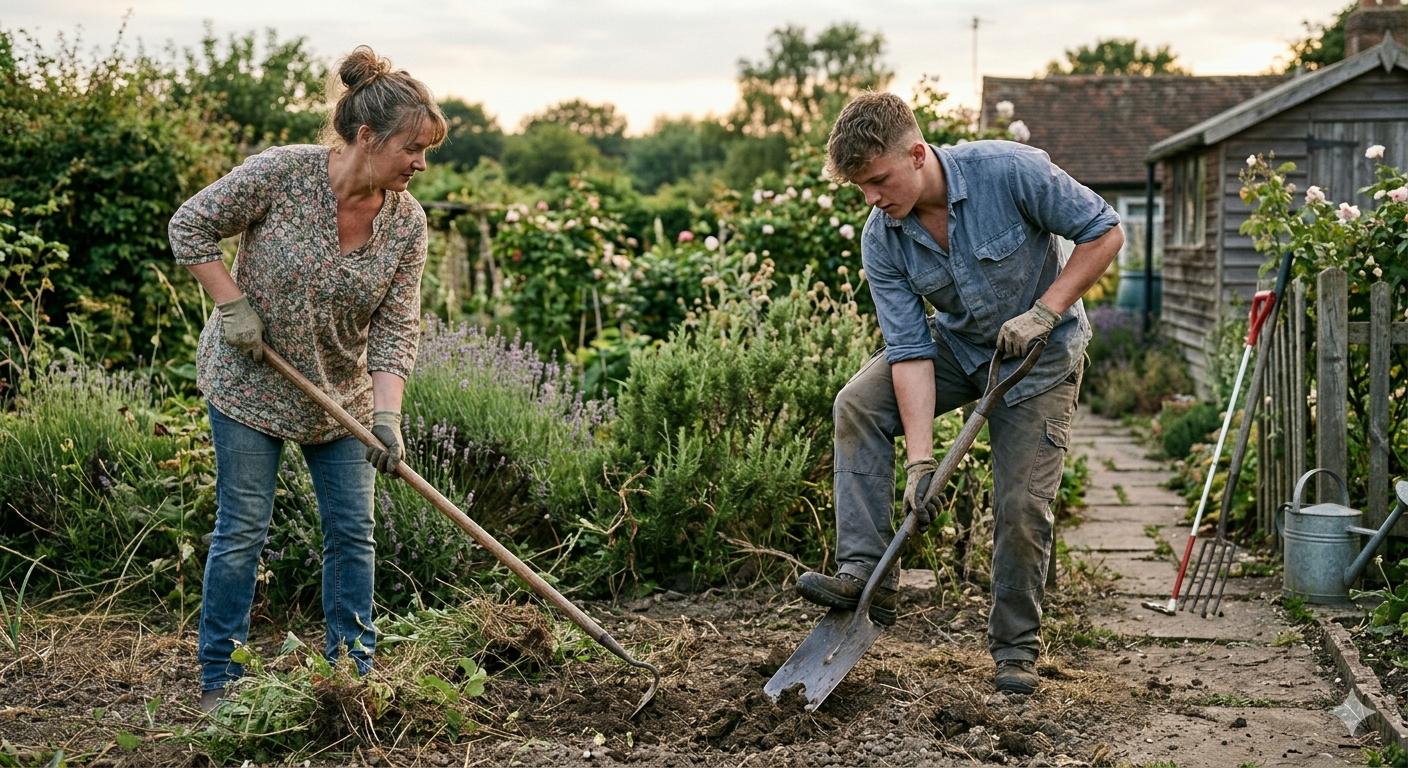
She arrived fifteen minutes early to the baby shower and helped her very pregnant sister-in-law set the table and dust the windowsills. On one sill a spider was weaving a web. Her sister-in-law feared spiders, yet Daisy could not crush it. She lifted it with a paper towel, wiped away the web, and carried it to the far wall of the back yard. “You should be safe here,” she said, and went back inside.
One by one the guests set down their gifts. Five boxes of diapers. Three cases of wipes. Oil, lotion, blankets of every design. The baby was set for the year, Daisy thought. Or they could open a daycare.
Her brother Damien arrived half an hour late, which was unlike him. Instead of his usual beaming smile, he pressed his lips together. He thanked everyone politely but did not work the room. Again and again he drew a letter from his shirt pocket, glanced at it, and put it away before anyone could read the envelope. Daisy was so distracted that she called guests by the wrong names and lost her train of thought, and finally she retreated to wash dishes.
After the last guest left, Daisy could not wait any longer.
“What’s in that letter, Damien?”
“I’ve been drafted. I report in two weeks.”
“Two weeks? That’s when the baby is due.”
“And all she might know of her father is a headstone,” he said, and wept. Daisy held him, just as they had held each other when they were told that their father, a captain, was not coming home.
She took the letter and read it. “I’ll go.”
“You can’t. You won’t even step on a spider.”
“The notice says a drafted person may name a family member to serve in their place. I can run, I can fit into the smallest spaces, and I can learn to shoot. What I can’t do is be little Daisy’s dad.”
Damien lunged for the notice. Daisy dropped, rolled, and squeezed her small body between two shelves. “You dropped a pen in here,” she called. “I’m using it to sign my name.”
“You’ll regret this when you come out,” he threatened, his voice shaking.
“You’re welcome,” said Daisy, and wrote her name. When she came out, her brother and sister-in-law hugged her, unable to speak. Then Damien signed his consent.
The reporting instructions allowed identification, toiletries, and whatever else fit in one small canvas pack. Daisy returned to the shopping center, where the sporting goods store had become a soldier’s shop since the draft. On a shelf hung a pack just like her father’s. If it was good enough for him, she thought, and bought it. Next came socks, because on one of their few hikes together her father had told her how much comfortable socks mattered to marching soldiers. She bought several pairs, in case another recruit forgot. At her favorite stationery store she bought a notebook, manuscript paper, and pens. Now I can write letters home, she thought, and send little Daisy her song when it’s finished.
The baby came the morning before Daisy reported. She weighed only five pounds but cried loud and clear. After her bath, Daisy wrapped her in the daisy blanket, and she slept. Damien, a professional photographer, took a picture, framed it, and handed it to Daisy. “We’ll all be praying for you.” She tucked it into her pack. As the bus was pulling out next morning, Daisy took it out and held it on her knee.
Within three weeks Daisy was the top runner in her women’s regiment, tied with a girl named Violet. They ran uphill and downhill with fifty-pound packs. Daisy had run marathons, but her first run with a heavy pack left her winded. When Violet seemed to float past her, Daisy ignored the pain in her leg and ran to catch up. Soon they were at the front together, trading stories and jokes so the run felt less like running toward death. It struck Daisy as ironic that the army let them bring so little but made them carry so much.
Routines comforted her. She was glad to wake early, make her bed, and clean the cabin, as she always had at home. Her father had made them rise at sunrise, make their beds, exercise, and start schoolwork. After he was gone she had kept the routine, and she taught the same discipline to her students.
She learned to shoot at targets, including scarecrows. She could hit the mark, but it made her sick. The hardest exercise was carrying a teammate. Daisy was petite, with delicate hands. When Violet played the unconscious one, Daisy nearly twisted her fingers hauling her up, and her arms shook so badly that she almost dropped her. “Careful,” Violet laughed. “You don’t want to drop your little namesake when you go home to visit.” Embarrassed, Daisy shouldered her pack every night after lights-out and did bodyweight exercises until her arms grew strong. I can’t drop a teammate, she told herself, and I can’t leave one hurt while I run for help. Despite her determination, she dreaded deployment and longed for home.
After two months the regiment was deployed to rescue civilians. The running and lifting paid off. They carried heavy supplies up flights of stairs and led people out of burned buildings and blockaded territory. By night Daisy was too exhausted to write home.
Once, she and Violet climbed the side of a building to reach four siblings, all under twelve. The oldest girl clutched her youngest brother, a baby of three months. She wept as Daisy and Violet pried her fingers loose, because he was dead. Helping her down the rope ladder, Daisy cried tears of rage at a war that was taking so many children’s futures.
That evening Daisy could hardly eat. Violet, who played viola in the regiment’s small band, knew Daisy needed every bite and asked her to teach her the cradle song. As Daisy hummed and showed her the fingerings, she pictured the baby’s round cheeks and felt her light body on the daisy blanket. I have to keep fighting, she told herself, if only so I can go home to my family. She began to eat.
Over the following weeks their missions edged closer to the front. Gunfire became a daily sound, and one teammate nearly stepped on a landmine before the regiment’s dog barked. Above her cot, Daisy had pinned a picture from Damien of little Daisy gripping a corner of the daisy blanket with one hand while hitting the keys of the toy piano with the other. Little Daisy would be six months old now, Daisy thought. Maybe I’ll see her first birthday.
One morning during drills Daisy and Violet heard a scream. Two enemy soldiers had dragged a young woman and her daughter into an alley. The girls sprinted forward, struck the men in the groin, and seized their rifles. As they raised them, the men pulled the civilians in front as shields.
“Drop those guns and we’ll let them go. Otherwise they die.” One drew a knife and held it to the child’s neck. After a moment of stillness, Daisy and Violet laid down their rifles, one at a time. The knife lowered. The men let go to retrieve their weapons.
Violet ran to check the mother and child. Daisy saw the glint of a rifle barrel rising behind Violet’s neck, aimed at her back. She ran and shoved her friend aside. She heard a shot, felt a searing pain, and knew no more.
Daisy woke to the smell of antiseptic and a throbbing in her right arm. I must change position, she thought, and turned to the right. There was no arm there.
A week later the doctor said she would go home that afternoon. She would have welcomed the news from anyone but him, because being released on his diagnosis made her a disabled veteran. Where had Violet been all week? No one had visited. Perhaps what she had read about war was true, and she was only an ID number, discarded when no longer useful. And she had thought Violet was her friend. What would she do at dawn now, if she couldn’t make her bed, exercise, or practice piano? How could she finish the cradle song with no right hand to play the melody?
Down the hall a keyboard sounded. When did they put a keyboard in the hospital? She followed the sound. The doctor sat at a digital piano, playing folk tunes from his hometown.
“Want to play something, Miss?”
“I don’t know,” Daisy said as she sat on the bench, her left hand hovering over the keys.
“Sure you do. You still have a good hand. My daughter was born with one arm, and she’s the best left-hand pianist I know.”
“Okay.” Daisy played the cradle song. After a few bars she wanted to quit, because the song only made her miss her right hand. Then a viola took up the melody, joined by a flute, a trumpet, a fiddle, and a clarinet. Her left hand found a bass line beneath them and kept finding the notes to the end.
“It’s beautiful,” she said, turning around. Behind her stood the regiment, smiling and clapping.
“Sorry we couldn’t come until now,” Violet said. “The enemy nearly took the town, but we pushed them back.”
“And we have gifts to send you home with,” said the commander. The fiddle player gave Daisy a wrapped box. Inside were a good pen, manuscript paper, a book of left-hand piano music, and Violet’s arrangement of the cradle song for the regiment. At the bottom lay an envelope holding Daisy’s honorable discharge.
“Daisy, thank you for your spirit, courage, sacrifice, and devotion to your comrades and your country,” the commander said, and pinned a medal on her. Attached to it was another envelope, holding a drawing of a caped soldier wearing Daisy’s face, signed, Violet said, by the mother and child Daisy had saved.
Elegy for a Right Hand
With you I opened my heart to play,
A tune that ran and danced and leapt.
With you I took a pen and signed,
My name to serve, my life to give,
In defense of our rights to speak, to live, to pray.
An itch, a throb, sniffles and sobs,
Cannot be scratched, dulled, or dried.
Your delicate hand, your once-quick fingers,
Are gone and replaced by a cold metal limb,
That grips too hard, but slips when turning doorknobs.
My handwriting slides, crooked across the page,
My body leans left, each step halting and short.
My niece cries when held with my left arm,
But smiles when I play her the cradle song,
Which I composed for her, before she knew her age.
Though I can no longer feel the smooth piano keys,
The comrade I saved is alive and well.
I can still write songs that move the heart,
And push the stroller to playgrounds and parks,
And raise my hand among the free.
Listen to the elegy
The poem read aloud (1:04, narrated with an AI voice).
Player not showing? Listen on Clyp.
Daisy’s Shopping Rush
Listen to the song
Music and lyrics by Judith Lung, sung with an AI voice. The lyrics follow the player.
Player not showing? Listen on Clyp.
Lyrics
Verse 1
A bottle of lotion to moisten the skin,
A box of diapers to keep the baby dry.
A blanket with pretty daisies all around,
The wild flowers that keep pushing through hard ground.
A toy piano for her little fingers,
Just the right gift for her music to begin.
Refrain
War takes our futures away,
A price that we all must pay.
Verse 2
A canvas pack like the one my father knew,
Four pairs of warm socks for marching in the war.
A notebook to write letters to those I love,
And prayers for grace and protection from above.
Staff paper to pen a gentle cradle song,
To sweet little Daisy, I’ll play it for you.
Refrain
War takes our futures away,
A price that we all must pay.
Verse 3
A medal to honor defending my land,
Sheet music for left hand from all my comrades.
A score my friend arranged of my cradle song,
For the band to play when my pain was too strong.
A child’s drawing of a soldier with my face,
For love and life I stand, and I raise my hand.
Final refrain
What war cannot take away,
Are hope and the friends who stay.